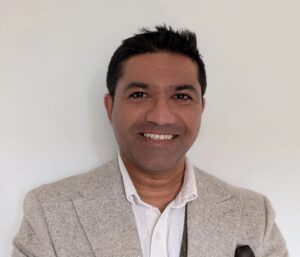

By Hannah Kramer, Chief Legal Officer, Apto
I recently joined a discussion hosted by the International Bar Association titled M&A meets megawatts: navigating transactions in the data centre world.
The session was framed specifically for M&A practitioners and brought together investment, real estate, infrastructure and power perspectives – reflecting the reality that data centre transactions now sit across all four.
Much of the discussion focused on how transactions are shaped in practice, rather than how they are structured on paper. The message was clear. In today’s environment, the outcome of a data centre transaction depends less on the mechanics of the deal and more on whether the underlying project can actually be executed.
From real estate to infrastructure logic
One of the strongest themes to emerge from the discussion was the need to be more precise about how data centres are categorised in transactional contexts. Treating them primarily as real estate assets no longer reflects how value or risk is assessed.
In practice, a data centre’s value is inseparable from its power position, delivery certainty and the long-term operational commitments it is built to support.
These considerations change how risk is assessed in a transaction: a site without a credible power strategy, a realistic delivery pathway or teams with the credibility to deliver is not a viable asset – regardless of how attractive it may appear on paper.
That infrastructure lens is increasingly influencing investor expectations, lender requirements and due diligence priorities, and it is reshaping how data centre transactions are approached at every stage.
Power as a transactional constraint, not just a technical one
Access to power has always underpinned data centre development. What has changed is the scale of demand and the timing at which power constraints surface in a deal process. Power can no longer be assumed to resolve over the life of a project or post-close; it is increasingly assessed upfront as part of transaction viability.
As demand has increased – particularly for higher density, power intensive workloads associated with AI and machine-learning use cases – the availability of grid capacity, the maturity of connection applications and realistic delivery timelines are being examined much earlier in diligence and valuation discussions.
The panel also discussed how utilities and regulators are responding. In several markets, queue management approaches are being tightened, with greater emphasis on whether projects can demonstrate genuine readiness – including land control, permitting progress and credible development plans. This is affecting who can secure power and, in turn, who can participate meaningfully in transactions.
For investors and acquirers, this reinforces the need to assess power position with the same rigour as land ownership, planning status and customer commitments. Power has always mattered, but it is now more visibly embedded in transaction risk and value.
Diligence is shifting from paper to execution
Another recurring theme was how often transactions now hinge on delivery risk.
Much of the discussion focused on practical questions: whether permits are in place, how secure the grid position really is, whether long lead equipment can be sourced on realistic timelines, and whether commitments made to customers are achievable in practice. These are central to whether a transaction stands up at all.
There was also a strong emphasis on the teams behind the projects. Successful delivery depends on people with experience in specific jurisdictions; teams who understand local utilities, planning authorities and regulatory processes. For those acquiring a platform rather than a single asset, this operational capability and local knowledge are critical components of value.
Customer arrangements and transaction viability
Historically, many data centre leases were negotiated without large scale financing, refinancing or enforcement considerations in mind. As capital requirements have grown, lenders and investors are paying much closer attention to how these agreements operate in practice.
Topics raised during the session included lease duration, termination mechanics, change of control provisions and the extent to which agreements allow assets to be financed or enforced without disruption. These issues are now central to transaction viability.
Hyperscale customers also bring very specific requirements around security, operational control and transparency, which shape the commercial framework of many assets. Understanding what is commonly accepted in this market (and why those positions exist) is essential. This is not an area where standard real estate assumptions translate cleanly.
ESG expectations are being set by the market, not just regulation
In practice, many of the most demanding environmental, social and governance requirements are being driven by project stakeholders – including customers, lenders and investors – rather than local legislation alone.
For operators, this creates an ongoing operational and reporting burden that needs to be properly resourced. For acquirers, it means assessing not just current compliance, but whether the platform has the systems, processes and expertise in place to meet these expectations over time.
Credibility as a differentiator
As the market matures, it is increasingly distinguishing between those who can reliably deliver and those who cannot. Credibility now sits at the intersection of power access, execution capability, customer trust and local knowledge.
As data centre transactions continue to increase in scale and complexity, that credibility underpins long-term value. While deal structures and financing approaches will continue to evolve, the fundamentals discussed – the ability to power, build and operate assets as promised – remain decisive.
Watch the discussion
The full M&A Meets Megawatts: Navigating Transactions in the Data Centre World webinar is available to watch via the International Bar Association.

Thank you to Adina Shapiro for moderating the session, and to my fellow panellists Jason Tofsky (Goldman Sachs) and Gabriel Silva (Simpson Thacher & Bartlett) for a thoughtful discussion.
Thanks also to the International Bar Association Corporate and M&A Law Committee, with support from the Real Estate and Power Law Committees, for convening the conversation.