

The data centre industry has been talking about growth beyond the traditional FLAP-D markets for years.
And for good reason. Power constraints, competition for land and longer development timelines have made it increasingly difficult to accommodate Europe’s growing capacity requirements within a relatively small number of established hubs.
We’ve moved on from debating whether other European markets can develop meaningful scale. They already are.
According to Cushman & Wakefield, FLAP-D still accounts for 43% of EMEA’s operational data centre capacity, but only 32% of the future pipeline. And that pipeline is substantial: 18.3GW of capacity is either under construction or planned, up more than 34% year on year. This is enough, if fully delivered, to more than double the region’s existing operational base.
That doesn’t mean growth is moving away from the ‘powerhouse’ markets. They’re still growing. But an increasing share of future capacity is being developed elsewhere – and that raises a more interesting question: where will the next major data centre markets emerge?
That’s something I recently discussed at DCD Investment Forum in London, during the roundtable, Mapping opportunities in Europe’s emerging markets.
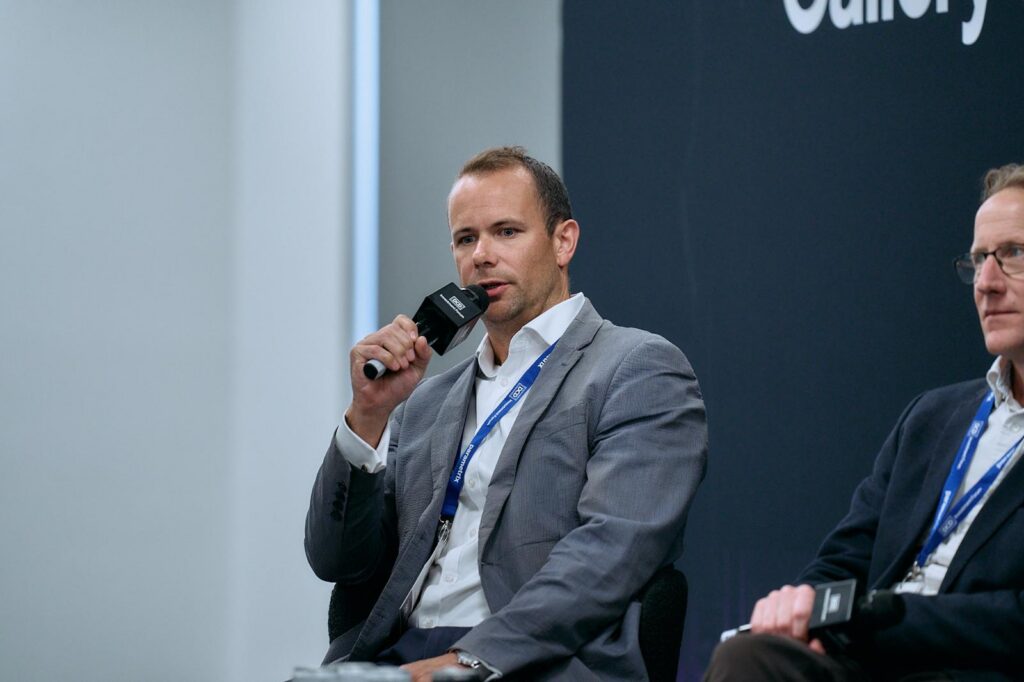
For me, the question is not just where we see potential. It’s how we identify the markets where customers are going to need capacity several years from now, and make sure we’re ready when that demand arrives.
At Apto, we…
Start with the fundamentals
We tend to start with some fairly basic questions.
How big is the economy? How many people live there? How quickly is it growing? How advanced is its digital economy? And where is that demand being served from today?
Greece is a good example. A lot of its data centre requirement can still be served from Frankfurt or Milan today. But at some point the maths changes.
As demand increases, and requirements around issues such as data sovereignty develop, it becomes increasingly difficult to see all of that infrastructure continuing to sit somewhere else.
Furthermore, the Greek government has been actively encouraging digitisation and investment, and we’re already seeing the development of the country’s digital infrastructure.
That was my point at DCD. For a market like Greece, I think it is a question of when, not if.
It’s one of the reasons we’re developing a €300 million hyperscale project in Athens, where 80 MVA of power has been secured.
The individual signals will be different in every country, but the principle is the same: start with the underlying economics and then look at what is happening around them.
Then decide when to move
Identifying an attractive market is one thing; deciding when to commit capital is another. Data centres have long development timelines, so waiting until demand is fully established can mean you’ve already left it too late.
Land, planning and power all need to be secured well in advance, and in some cases significant enabling infrastructure needs to be funded before there is a firm customer requirement.
A substation is a good example. You may need to make that investment early if you want to have capacity available at the right point.
But how early?
That’s where judgement comes in. There isn’t one metric we can plug into a model that gives us the answer. We’re looking at a range of signals and deciding when there is enough evidence to move.
The aim is to be in the right place at the right time, without taking unnecessary speculative risk.
Madrid and Milan show how markets can move
Madrid and Milan are good examples of how quickly markets can evolve. I said at DCD that if they aren’t already considered Tier 1 markets, I think they will be. Milan, in fact, is now classified by Cushman & Wakefield as one of EMEA’s seven primary markets.
The fundamentals are there: major cities, large European economies, significant populations, growing digital requirements and established cloud zones. Apto has made significant commitments to both.
In Greater Milan, we’re planning a major data centre campus across a 228,000 sq m site with 300 MVA of planned power capacity. In Madrid, our 195,000 sq m site in Fuenlabrada sits within an established and rapidly growing cloud region.
Both demonstrate how quickly an alternative market can become an established part of Europe’s data centre landscape. The question now is which markets will follow.
A good market still needs the right site
Identifying the right market is only part of the equation. We’ve looked at well over 100 sites while building Apto’s European platform, focusing on the right zoning, a low-risk route through permitting and clear line of sight to power.
The headline land price can also be misleading. A cheaper site doesn’t necessarily mean cheaper capacity once you factor in the cost of bringing in power, cabling and other infrastructure, the planning position and proximity to existing availability zones. It’s the all-in cost that matters.
We’ve seen other buyers bid more aggressively for sites, but you have to stay disciplined. The objective isn’t to own land. It’s to develop viable data centre capacity.
And think about who comes next
We debate the Nordics a lot internally. There are obvious attractions, particularly around access to power, and I’m sure there will be very successful developments there. But the question I keep coming back to is the reuse case.
If you build a very large facility in a remote location for one customer, what happens in ten years’ time if that requirement changes? Who is the next customer for that capacity?
That’s one of the reasons our strategy has focused on existing cloud zones. Nobody can predict exactly what demand will look like in ten years, but a major city with a growing digital economy gives us greater confidence in the long-term demand for that infrastructure.
So, where next?
I don’t think there is an easy answer.
Europe isn’t simply moving from one fixed group of established data centre markets to another. FLAP-D continues to grow, while Madrid and Milan are reaching a different level of maturity, the Nordics are attracting significant investment, and markets such as Poland and Greece have fundamentals that suggest there is considerably more to come.
For customers, what matters isn’t whether we call somewhere Tier 1, Tier 2 or emerging. It’s whether the capacity they need will be there when they need it.
For us, that means looking at where demand is going rather than just where it is today – and making decisions about land, power and infrastructure before the answer becomes obvious.
Because by the time everyone agrees where the next major data centre market is, it’s probably too late to start planning for it.
Thank you to Tesh Durvasula, CEO of AtlasEdge; Adam Eaton, CEO of VIRTUS Data Centres; Des O’Byrne, Head of Infrastructure Strategy at Colt; and Thomas Buckley, Global Portfolio Manager at DatacenterDynamics, for a great discussion at DCD Investment Forum.